Choosing the Best AI Solutions for Content Creation

TL;DR
- ✓ Move beyond simple text generation toward complex, autonomous agentic workflows.
- ✓ Prioritize Generative Engine Optimization to become a verifiable source of truth.
- ✓ Eliminate tool-stack bloat by matching AI solutions to your organizational maturity.
- ✓ Focus on pipeline integrity rather than just individual AI output quality.
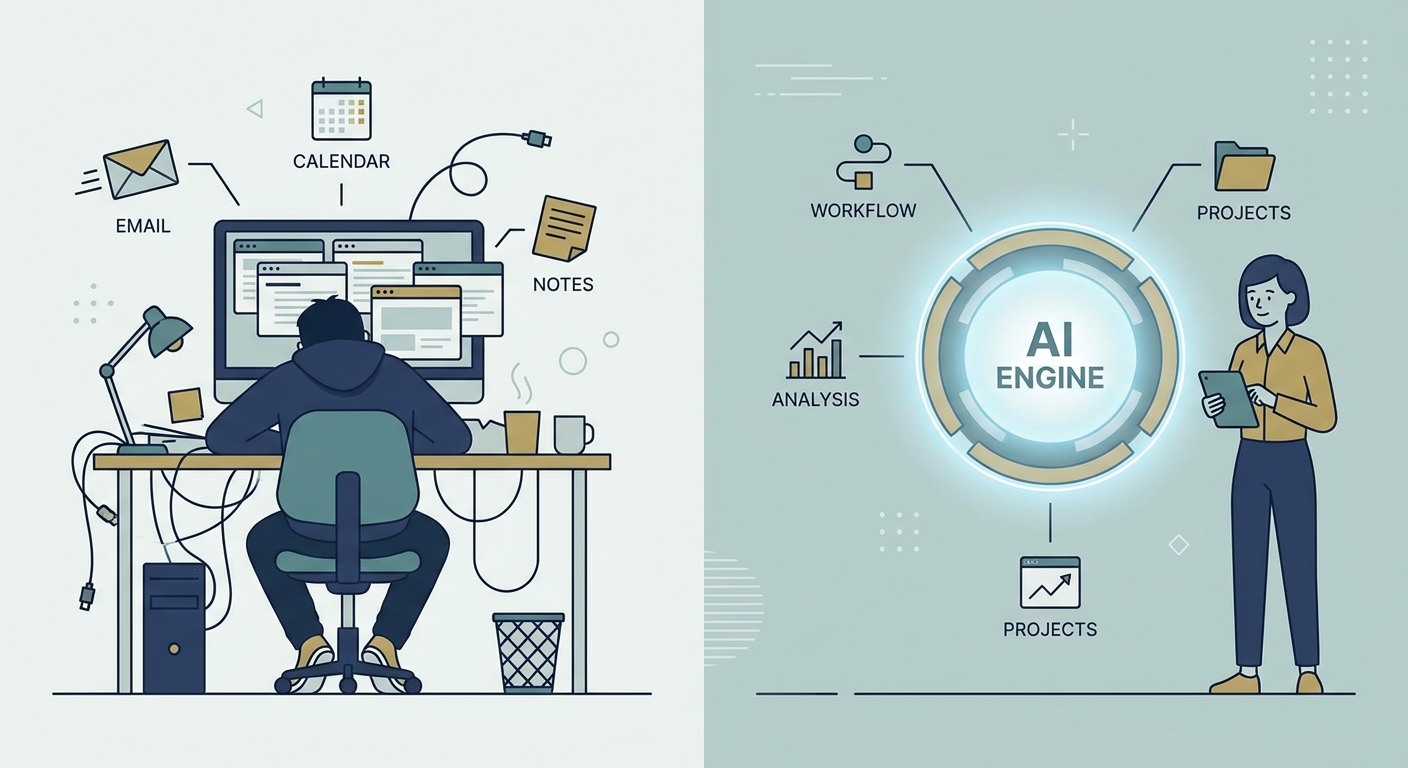
Winning in 2026 isn’t about chasing the "smartest" chatbot. It’s about building a workflow that keeps you from drowning in tool-stack bloat. If you’re still tab-hopping—copying from one AI, pasting into an editor, then manually tweaking for SEO—you aren’t running a strategy. You’re running a digital assembly line that’s leaking time and money.
The winners have moved on. They’ve abandoned "shiny object syndrome" in favor of unified engines that prioritize agentic efficiency and Generative Engine Optimization (GEO).
How Has the AI Content Landscape Changed in 2026?
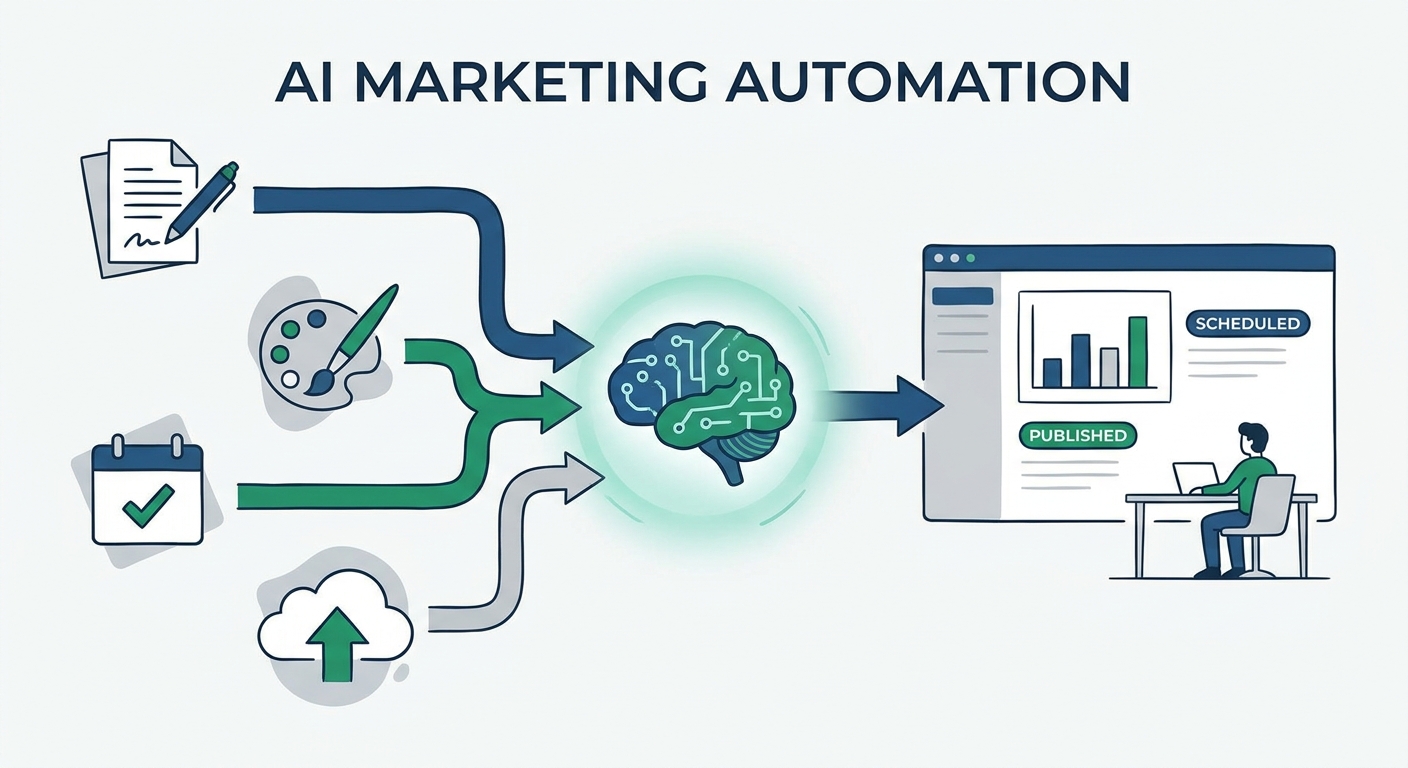
The era of the "prompt engineer" is dead. You don’t need to spend your morning crafting the perfect sentence to trick a model into being helpful. As the Adobe Digital Trends 2026 Report highlights, we’ve shifted from simple text generation to complex, agentic workflows. We’re no longer looking for tools that just write; we’re looking for agents that research, verify, draft, and format content with zero hand-holding.
Think back to 2024. You probably wasted hours fighting with ChatGPT to get the tone right. In 2026, you define a goal. An agentic workflow pulls your proprietary data, cross-references it against market shifts, and serves up a draft that only needs a human touch. The focus has moved from the output (the words on the screen) to the integrity of the pipeline (how those words get there).
Why Should You Prioritize Generative Engine Optimization (GEO)?
Traditional SEO isn't dead, but it’s no longer the only game in town. When users want answers, they go to Perplexity, Gemini, or ChatGPT. They want the truth, and they want it now.
Generic AI content—the kind that reads like it was scraped from the bottom of a Wikipedia page—is invisible to these systems. It’s noise. Generative Engine Optimization is about becoming the signal. These AI search engines crave entity authority and verifiable insights. If your content doesn't offer a perspective the model hasn't seen a thousand times before, you don’t exist. GEO isn't about stuffing keywords; it's about becoming the "source of truth" that the AI cites when the pressure is on.
The AI Selection Matrix: Which Tool Fits Your Maturity Level?
Choosing the right stack depends on where you sit on the growth curve. A solo founder needs pure agility. An enterprise needs ironclad governance.
For the solo founder, the best tool is the one that actually talks to your other apps. Use native APIs of top-tier LLMs paired with automation triggers. It’s lean, it’s fast, and it works.
If you’re an agency, you need a platform that handles RAG (Retrieval-Augmented Generation). Stop forcing your team to re-prompt the AI with the same brand guidelines every single day. For large enterprises, anything less than a private, fine-tuned model is a massive liability. You can’t risk brand inconsistency or data leaks.
How Do You Stop "Generic" Content from Diluting Your Brand?
The biggest danger with AI isn't that it's "wrong"—it's that it's average. Models are trained to provide the most statistically probable response, which is just a fancy way of saying they prefer to be boring.
To defend your brand, treat your proprietary data like gold. This is where RAG becomes non-negotiable. By "brand-training" your AI, you force it to reference your internal archives, case studies, and unique research before it writes a single word. Want to see how to structure this? Our Content Marketing Strategy Guide breaks down exactly how to build an engine that synthesizes your expertise rather than regurgitating the internet’s consensus.
Why Workflow Consolidation Beats Tool Stacking
There’s a dangerous urge to buy a new "AI tool of the week" every time something hits Product Hunt. Stop it. Every time you buy a new tool, you create a silo. If your research tool doesn't talk to your writing tool, and your writing tool doesn't talk to your CMS, you haven't gained efficiency—you've just added more manual labor to your plate.
Look for consolidation. Can the platform handle the research, the draft, the SEO, and the final publish? If the answer is no, you’re just adding layers. For those looking to scale, How to Scale Your Content Production is a critical resource for auditing your processes before you add more software weight.
Where Do Most AI Tools Fail? (Honest Limitations)
Let's be clear: AI is a master of synthesis, but it’s a terrible judge of truth. It hallucinates. In legal, medical, or technical fields, that’s a dealbreaker.
There’s also a real trade-off between speed and quality. If you push for 10x output, you’re going to get a 10x decline in voice quality unless you have a human-in-the-loop. This is why Google's E-E-A-T Guidelines remain the gold standard. Users (and Google) can smell "automated slop" from a mile away. Your AI should be a force multiplier for your experts, not a replacement for them.
Conclusion: Building Your Future-Proof Content Engine
Stop chasing the "hottest" tool. Focus on the pipeline. Integrate your unique data, keep your voice steady through RAG, and optimize for generative search. Start small: automate one annoying, repetitive task. Get it right. Then, scale. The goal isn't to be a "content machine." It's to be an authority that uses machines to make your voice louder.
Frequently Asked Questions
Is AI-generated content still good for SEO in 2026?
AI-generated content is effective only when it is high-quality, human-verified, and expert-backed. Mass-produced, unedited AI spam is increasingly penalized by search engines and ignored by users. Success now requires using AI to synthesize your own unique expertise and proprietary data, not simply to generate filler text.
How do I keep my brand voice consistent across different AI tools?
You maintain consistency by moving away from "prompting" and toward "RAG systems" (Retrieval-Augmented Generation). By centralizing your brand guidelines, past successful content, and style guides in a knowledge base that your AI models query, you ensure the AI is always drawing from the same source of truth, regardless of the interface.
Should I use a general-purpose AI or a specialized content platform?
It depends on your scale. General-purpose LLMs like Claude or ChatGPT offer unmatched flexibility for complex, custom tasks. However, if your team is struggling with workflow bottlenecks, a specialized content operations platform is better because it provides pre-built pipelines that automate the research-to-publish process, reducing the "manual configuration" time required for general models.
How does Generative Engine Optimization differ from traditional SEO?
Traditional SEO focuses on keywords and backlinks to rank on a static results page. GEO focuses on entity authority and providing high-quality, verifiable answers that AI search engines (like Perplexity or ChatGPT) choose to cite. It is about being the most credible source on a topic so the AI pulls your content directly into its generated response.
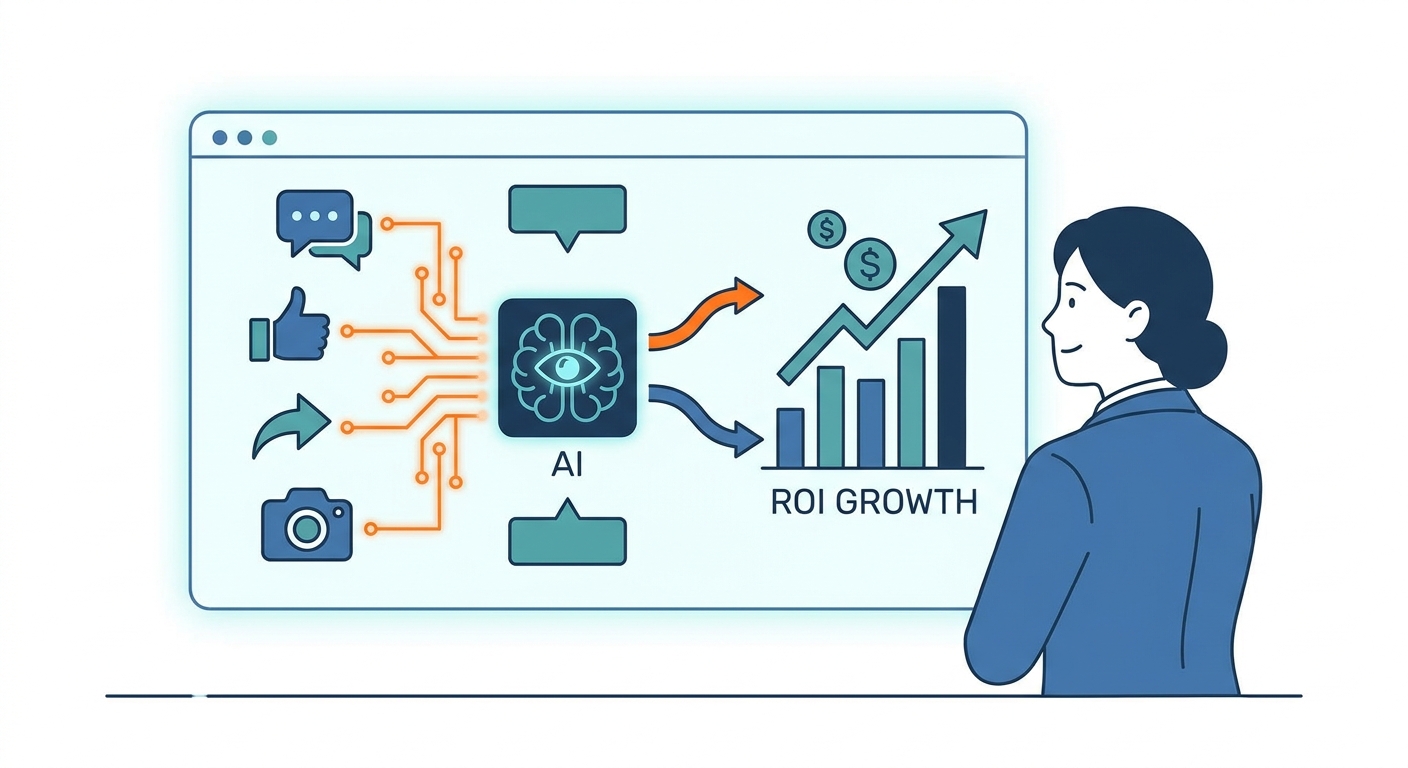
How can I measure the ROI of my AI content stack?
Measure ROI through three lenses: time-saved per content piece, total output capacity increase without adding headcount, and the impact on engagement metrics. If your AI stack is not reducing the "human hours" required to hit your high-authority quality bar, it is a cost center, not an asset.