The 2026 Toolkit: Essential Software for Social Media Analytics and Content Management

TL;DR
- ✓ Abandon all-in-one dashboards for modular AI-native workflows to bypass API volatility.
- ✓ Prioritize conversion-centric tracking over vanity metrics to prove actual social media ROI.
- ✓ Select specialized tools that integrate directly with your CRM and BI suites.
- ✓ Treat API access as a strategic asset for high-fidelity data and reporting.
If you’re still running your social strategy with a "post-and-pray" mindset, stop. You’re bleeding equity. The market has shifted, and the rules of the game are different now.
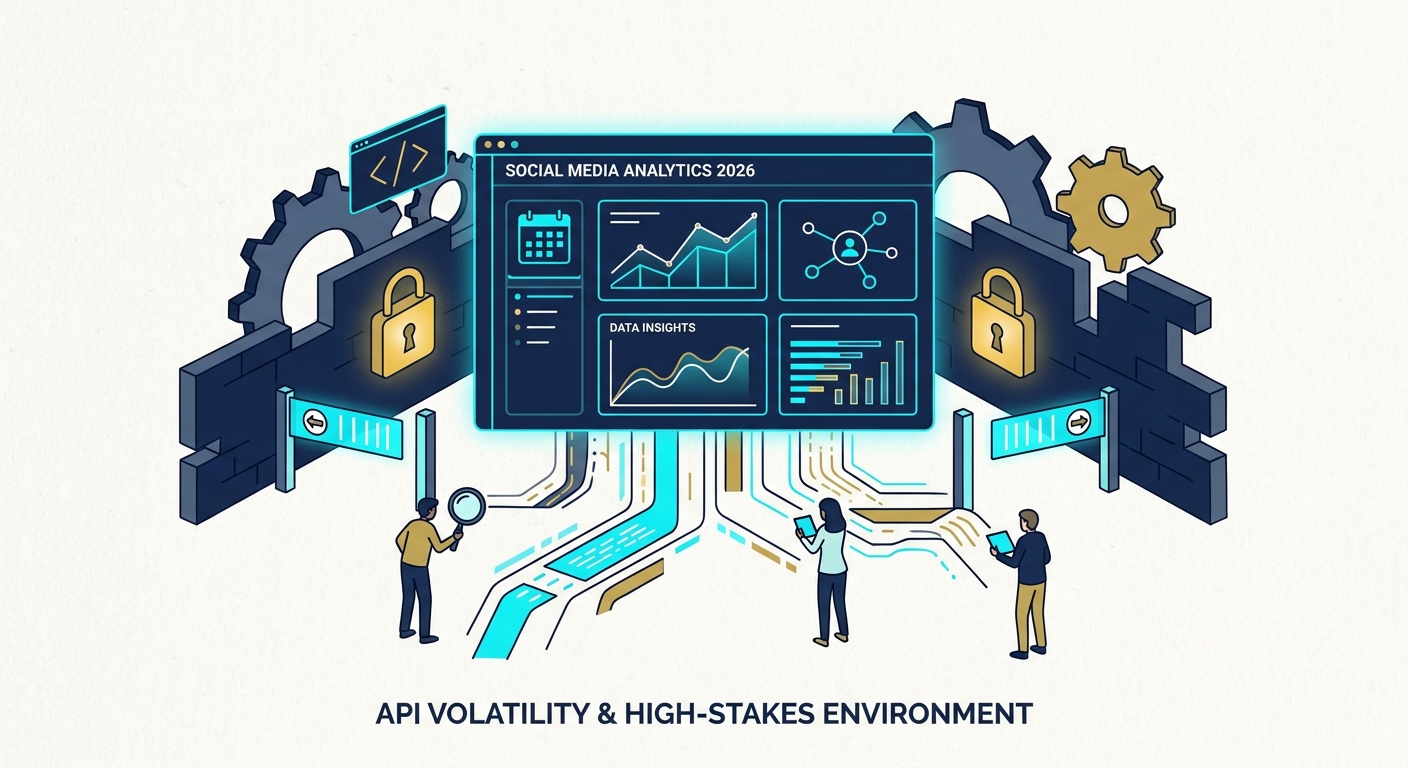
Welcome to 2026. The social media world is currently defined by one brutal, invisible wall: API volatility. Platforms like X, TikTok, and Instagram have locked down their data pipes tighter than a bank vault. What used to be a playground for third-party tools is now a high-stakes, pay-to-play environment. If you’re clinging to the "all-in-one" fantasy—that single dashboard that promises to fix everything—you’re already behind. It’s time to grow up and embrace a modular, AI-native workflow that values raw conversion data over the cheap dopamine hit of vanity metrics.
Why the 2026 Landscape is Fractured
We’ve moved past the era where AI was just a glorified spell-checker. That’s dead. Today, the best tools are built on models trained to mirror your specific brand voice and run predictive trend analysis.
But here’s the catch: the "one-size-fits-all" myth has collapsed under the weight of API costs. Social networks are charging a premium for data access, meaning no single tool can handle deep social listening, high-fidelity video analytics, and CRM integration without making massive compromises. You’re either getting a jack-of-all-trades that masters none, or you’re building a stack that actually works.
How Should You Evaluate Your Social Media Toolkit?
Transparency is the only currency that matters. In our analysis of over 50 platforms—benchmarked against G2’s Best Social Media Suites Report—we found that the tools actually worth your budget are those that treat API access as a strategic asset, not a commodity.
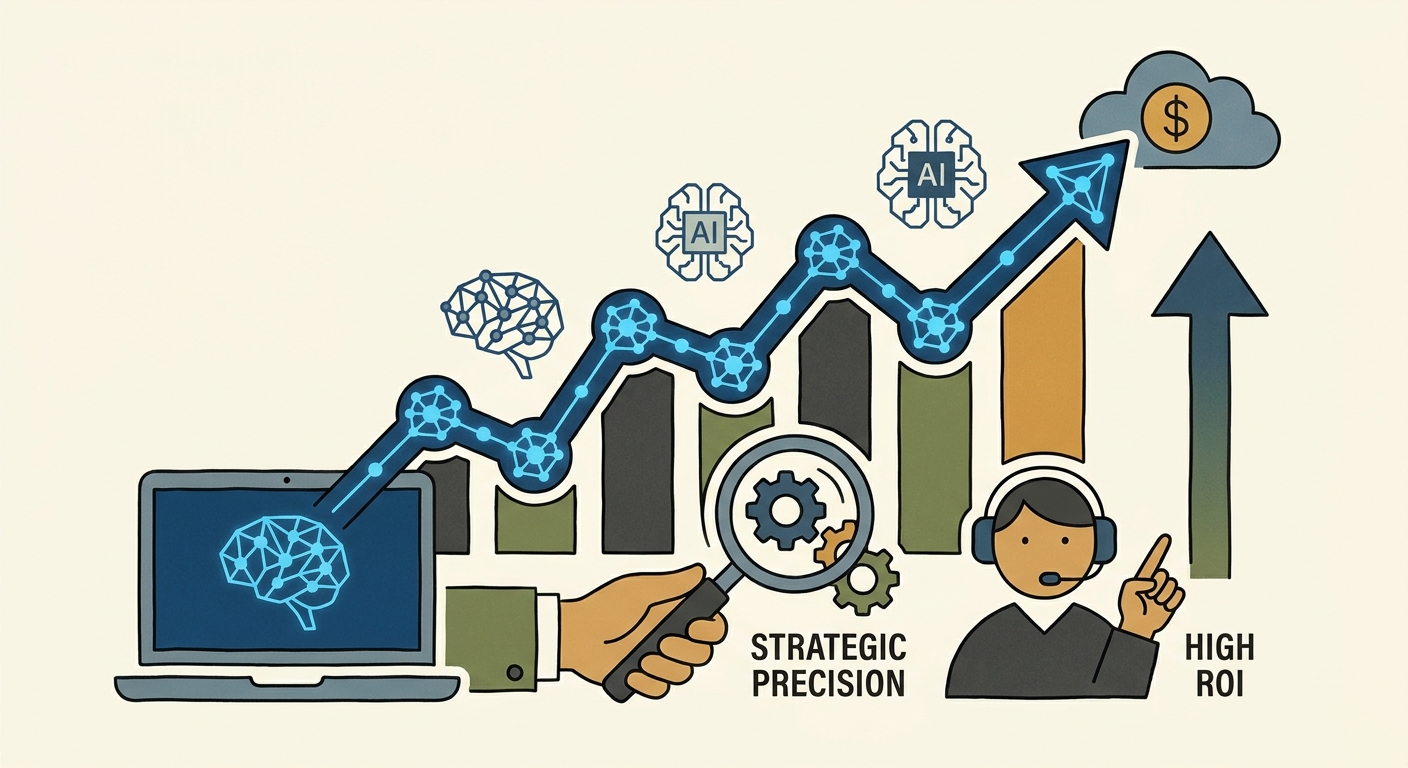
Stop hunting for "total follower counts." That’s a vanity metric for amateurs. Start hunting for "conversion-centric tracking." If your software can’t draw a direct, dotted line between a TikTok post and a lead sitting in your CRM, it’s a liability. Period. You need to ask yourself: Does this tool give me native attribution? Or am I stuck drowning in messy UTM parameters and manual spreadsheets? Real-time, API-verified data that pushes directly into your BI suite is the only way to play.
The "All-in-One" Suite: Best for Agencies and Large Teams
If you’re an agency juggling thirty clients, a "best-of-breed" stack can quickly turn into a logistical nightmare. This is where enterprise-grade suites like Agorapulse or Sprout Social still hold the crown. They solve the "compliance and permission" headache that kills smaller teams.
As noted in Planable’s Agency Marketing Blog, the real value for big teams isn't the AI drafting—it’s the workflow. You need a hub for legal review, client sign-offs, and granular user roles. If you’re an agency, your software choice should be about how well it keeps you from getting fired by a client, not how cool its AI features look.
The "Best-of-Breed" Stack: Why Niche Tools Are Winning
While suites are great for management, they usually lack depth. A growing number of creators and lean teams are moving to a "stacked" approach. They use a specialized tool like Typefully to master the specific nuances of X’s algorithm, or Iconosquare to pull the kind of granular visual analytics that broader tools just ignore.
The trade-off? You lose centralized reporting, but you gain surgical precision. You’re trading convenience for a competitive advantage. If your brand lives or dies by a single platform, don't force that platform into a generic box. Use the tool that actually speaks its language.
How Do You Automate Without Losing Your Brand Voice?
Automation has a branding problem. Too many teams use off-the-shelf AI templates that strip the soul out of their content. In 2026, the standard is "brand-trained" models. You shouldn't be using a prompt; you should be feeding your tool your own high-performing content history. Let the AI be a starting point, not the final word.
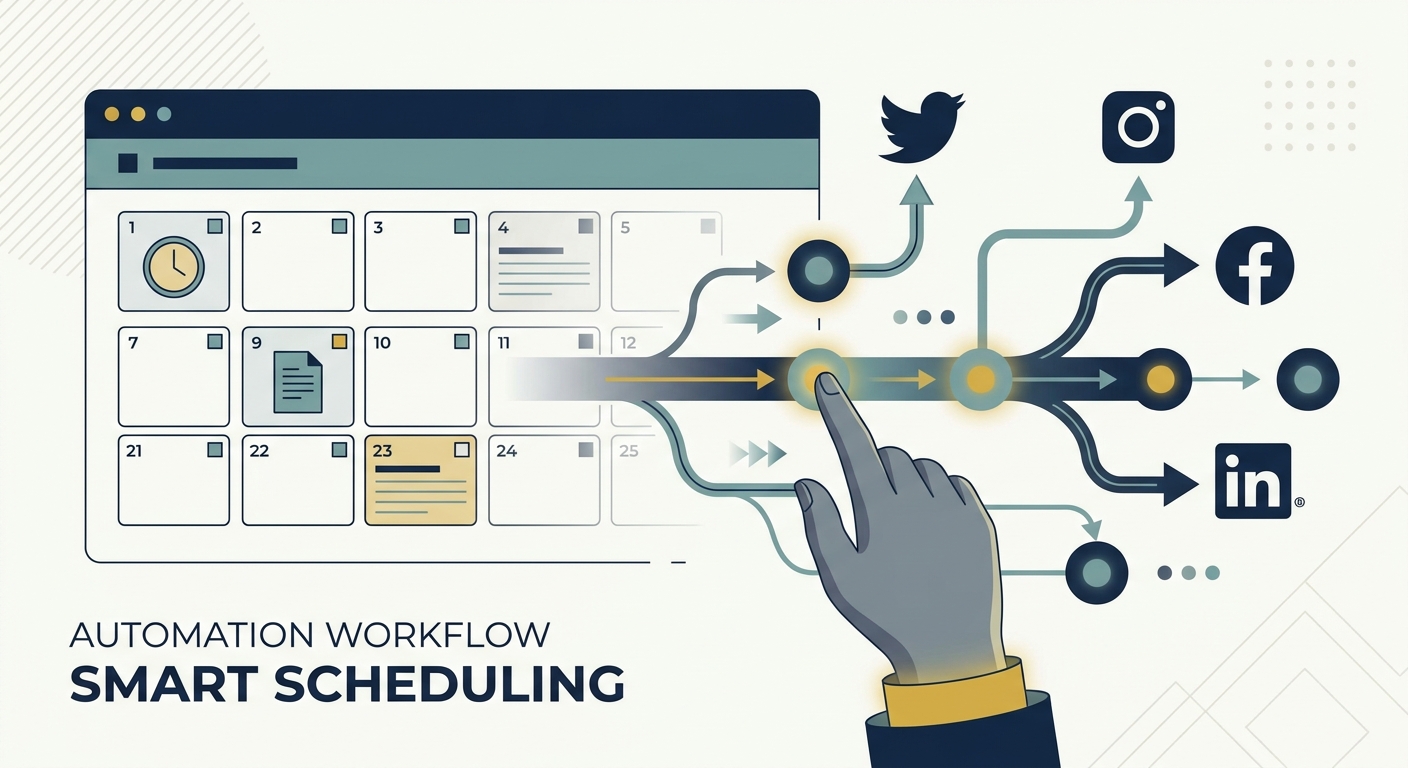
We require a "Human-in-the-loop" for 2026. If you’re interested in refining your process, our Complete Guide to AI Content Creation details how to set up guardrails that ensure your brand voice remains consistent even when you crank up your output volume by 10x. Automation should handle the heavy lifting of scheduling and data sorting, but it should never be the one hitting "Publish" on your brand's reputation.
Closing the Loop: Bridging Social Data to Revenue
Social media isn't a "top-of-funnel" vanity play anymore. To prove your value in 2026, you have to integrate your social suite with your CRM. If your social software doesn't talk to Salesforce, HubSpot, or your internal database, you’re flying blind.
Tracking social media ROI isn't about counting clicks; it’s about mapping the customer journey from a comment to a checkout. When you bridge this gap—as outlined in our How to Track Social Media ROI guide—you shift the conversation from "how much did we spend on social" to "how much revenue did social drive?" For those looking to connect the dots, Zapier’s Guide to Social Media Automation is still the gold standard for turning disparate APIs into a revenue-driving machine.
The 2026 API Reality Check: What Can You Actually Automate?
Let’s be honest: the days of "set it and forget it" are over. Private profile restrictions and locked video features mean some parts of your strategy will always require a human touch.
You can automate the distribution, but you can't automate the nuance of community sentiment during a PR crisis. Understanding where to draw the line between machine efficiency and human intuition is what separates the veterans from the amateurs.
Summary Comparison Table
| Tool | Focus | Ease of Use | AI Capability | API Reliability |
|---|---|---|---|---|
| Sprout Social | Enterprise/Agency | High | High (Predictive) | Excellent |
| Agorapulse | Agency/SMB | High | Medium | Excellent |
| Typefully | Niche (X/Threads) | Very High | High (Voice-tuned) | High |
| Iconosquare | Visual/Analytics | Medium | Medium | High |
| Buffer | Solopreneur/Small | Very High | Low | Moderate |
Frequently Asked Questions
Which social media tool is best for managing multiple client accounts?
For agencies, platforms like Agorapulse or Sprout Social are the industry leaders. They offer the necessary user-permission structures, robust approval workflows, and centralized social inboxes required to keep multi-client operations compliant and efficient.
Can I fully automate my social media in 2026, or is human oversight still required?
You can automate the heavy lifting of scheduling and basic analytics, but human oversight is non-negotiable. AI-generated content still requires a "sanity check" to ensure it aligns with current brand sentiment and to prevent the tone-deaf errors that often occur when machines operate without context.
Why do social media tools cost more for "Social Listening" and "Competitor Analysis" now?
The cost increase is a direct result of platform-level API pricing. Social networks now charge third-party tools significant fees for access to real-time data and historical insights, costs that are necessarily passed on to the end-user.
Are there free tools still worth using in 2026?
Free tools are excellent for early-stage startups or personal creators, but they are generally "freemium" in nature. They will lack the advanced API access, deep-dive analytics, and team-based collaboration features required for professional, scalable marketing.
How do I decide between an "All-in-One" suite and a "Best-of-Breed" stack?
Choose an "All-in-One" suite if you prioritize team collaboration, centralized billing, and ease of management for multiple accounts. Choose a "Best-of-Breed" stack if your strategy requires deep, platform-specific functionality and you have the technical bandwidth to integrate these tools into your broader CRM workflow.