Ethics of Using AI in Content Creation

TL;DR
- ✓ Establish robust AI governance to protect your brand from legal and reputational risks.
- ✓ Understand that agentic AI workflows demand human oversight to prevent automated errors.
- ✓ Mitigate hallucinations, algorithmic bias, and IP ambiguity through strict safety protocols.
- ✓ Prioritize audience trust as your primary competitive advantage in an AI-saturated market.
The shift from "let’s play with ChatGPT" to full-scale enterprise AI isn’t just a trend—it’s the defining headache of 2026. If you’re still treating AI governance as an optional side project, you’re already behind.
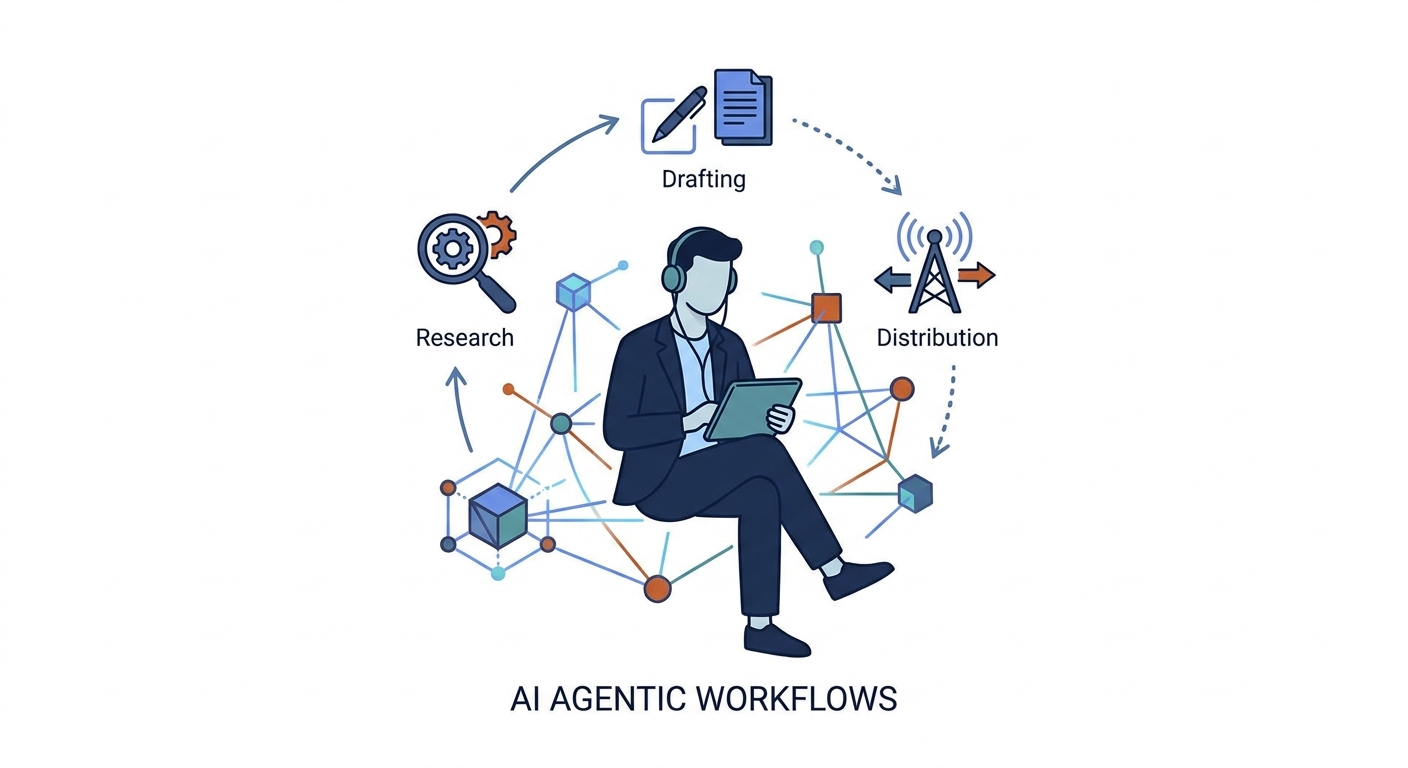
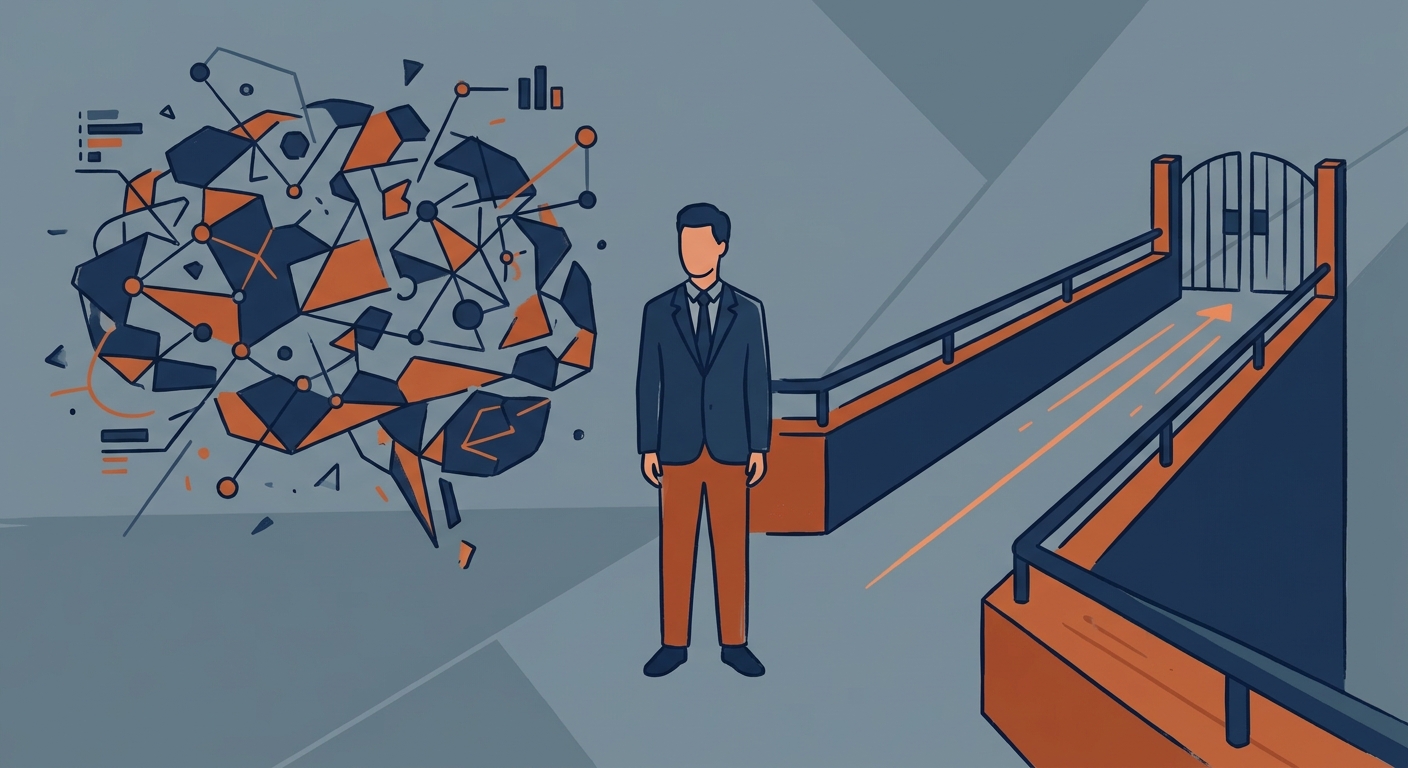
Ethical content creation isn't about slapping red tape on innovation. It’s about building a guardrail that keeps your brand from driving off a cliff. As we move from simple AI drafting to fully agentic workflows—where systems research, write, and hit 'publish' without a human blinking—the stakes have shifted. Trust is now your only real competitive advantage. If you aren't crystal clear about how your content is made, you aren't just lazy; you're actively eroding the relationship you’ve spent years building with your audience.
What "AI-Generated" Actually Means in 2026
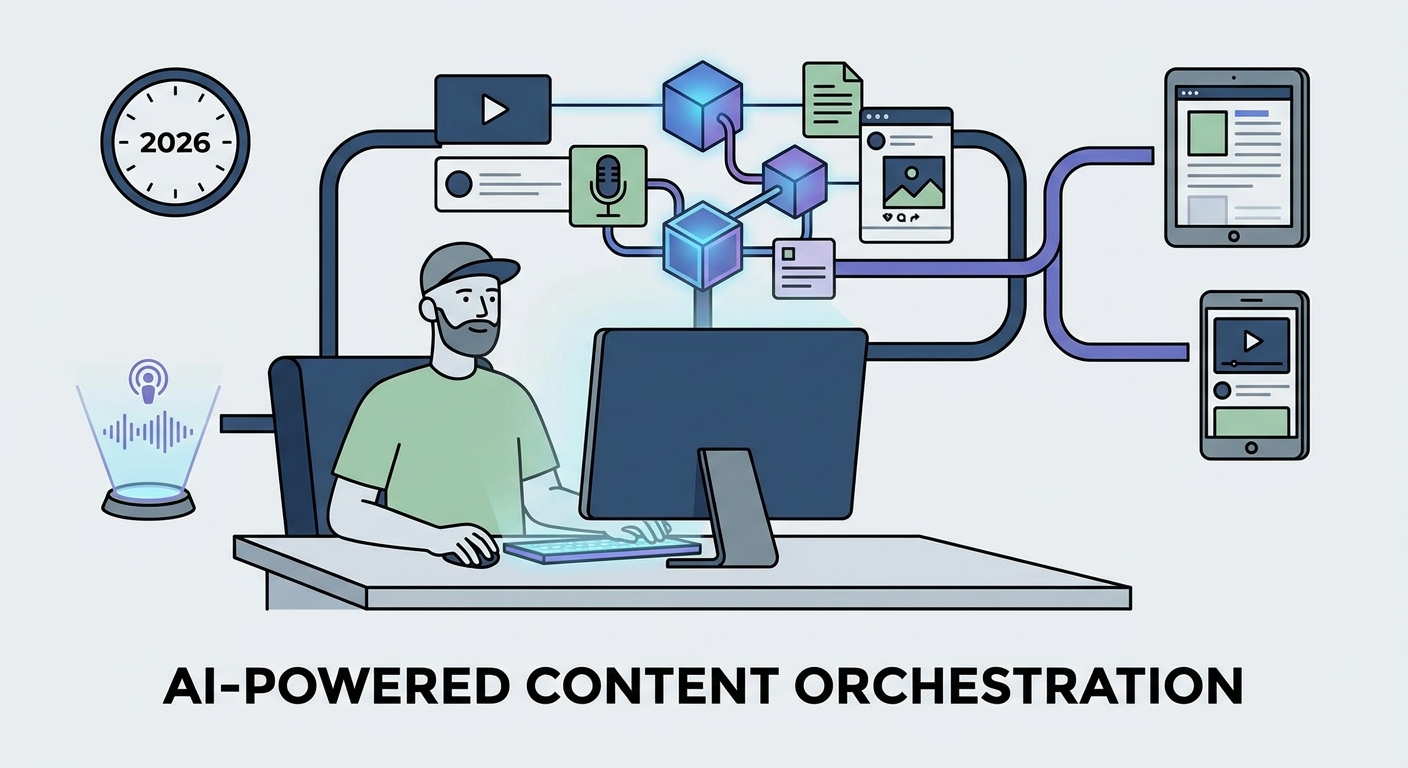
Forget the days of just copy-pasting a blog post. We’re in the era of agentic content. These systems are autonomous. They hunt for data, draft, edit, and push live. We’re talking synthetic video, hyper-realistic avatars, and dynamic engines that rewrite your homepage for every single visitor in real-time.
When we say "AI-generated" today, we’re talking about the entire synthetic pipeline. It’s not just the text on the page; it’s where the data came from, the hidden biases in the model, and the lack of human friction in the distribution chain. You have to understand this scope, or you’re flying blind.
Is Your Organization Actually Ready?
The rules are getting tighter. With the UNESCO Recommendation on the Ethics of AI setting the global bar, the "move fast and break things" era is officially dead. In this new landscape, ignoring how your models process data isn't just a PR hiccup—it’s a massive legal liability.
Yet, most marketing departments are still operating like it’s 2022. The IAB Research on AI Adoption vs. Safeguards paints a grim picture: everyone is using AI, but almost no one has the infrastructure to stop it from going off the rails. If your team is pumping out customer-facing content using LLMs without a documented safety protocol, you are begging for a disaster.
The Three Horsemen of AI Failure
Modern content workflows hit a wall in three specific ways: hallucinations, bias, and legal soup.
1. Hallucinations
Generative models are machines for guessing, not truth-tellers. They predict the next word; they don't verify facts. When your brand presents a hallucinated statistic as gospel, you don't just look wrong—you look like an amateur.
2. Algorithmic Bias
Models are trained on the internet. And let’s be honest: the internet is a cesspool of human history’s worst biases. If you aren't auditing your prompts and your data, your content will reflect those skewed perspectives. It’s not a matter of 'if,' but 'when.'
3. IP Ambiguity
Who owns what an AI makes? It’s a legal minefield. If you’re leaning on models that scrape copyrighted data without permission, you’re building your brand on shifting sand.
The "Human-in-the-Loop" Mandate
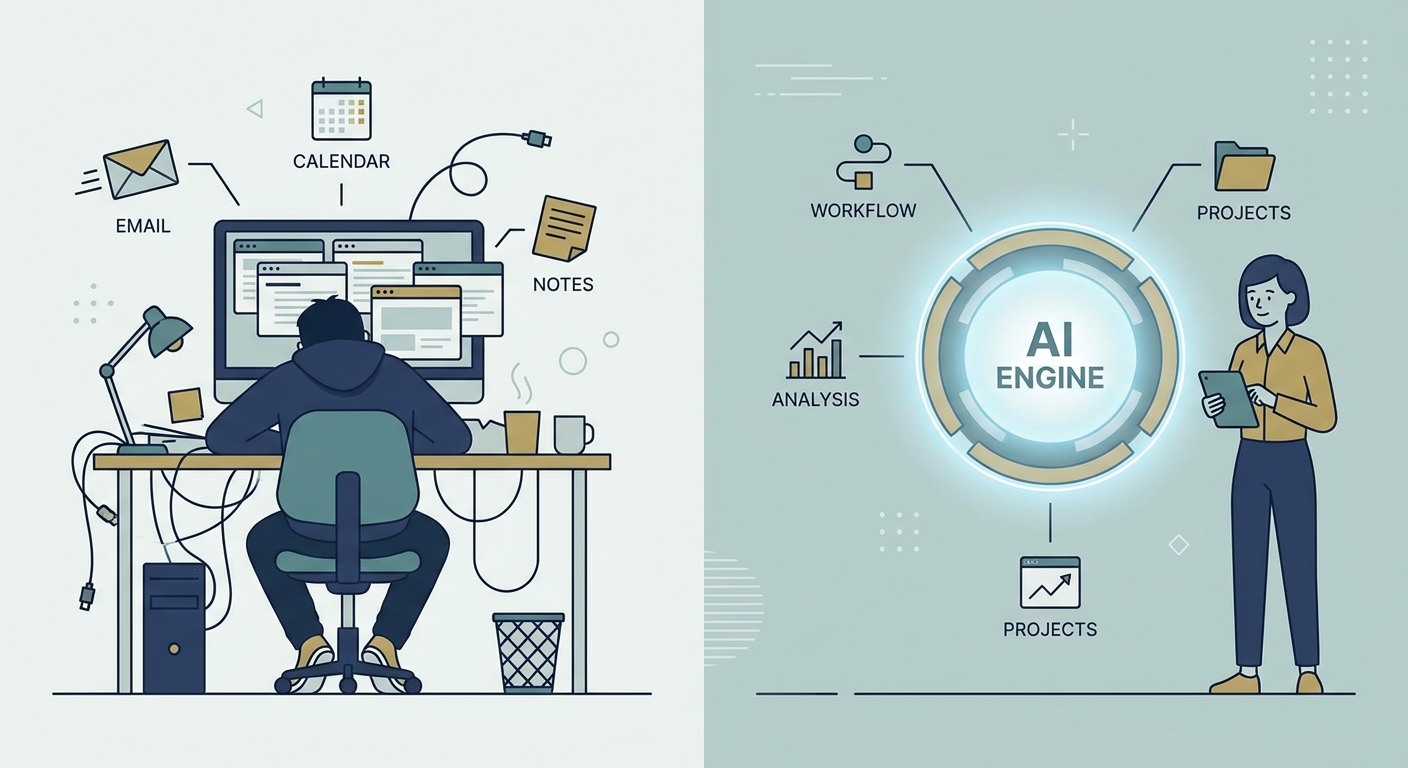
Automation should make your team better, not redundant. To keep your quality high and your ethics intact, you need a "Verification Gate." This isn't a suggestion; it’s a requirement.
In our own Content Governance Framework, we require a three-tier review for every piece of AI-assisted work: factual validation, tone alignment, and source verification. Every single claim gets checked against our internal knowledge base before it hits the web. No exceptions.
Building a Trust-Based Disclosure Strategy
Stop hiding the AI. Honesty is a massive brand differentiator. Forward-thinking companies are wearing "Transparent AI" like a badge of honor.
The psychology here is simple: when you tell your audience how you use AI—whether it’s for summarizing data, enhancing images, or brainstorming structures—you kill the "uncanny valley" effect. People don't mind AI; they mind being lied to. Use clear labels. Put a note at the bottom of the post. Own the process.
Scaling Without Losing Your Soul
The "Generic Output" problem is the silent killer of brands. When everyone uses the same foundational models, everything starts to sound like beige wallpaper.
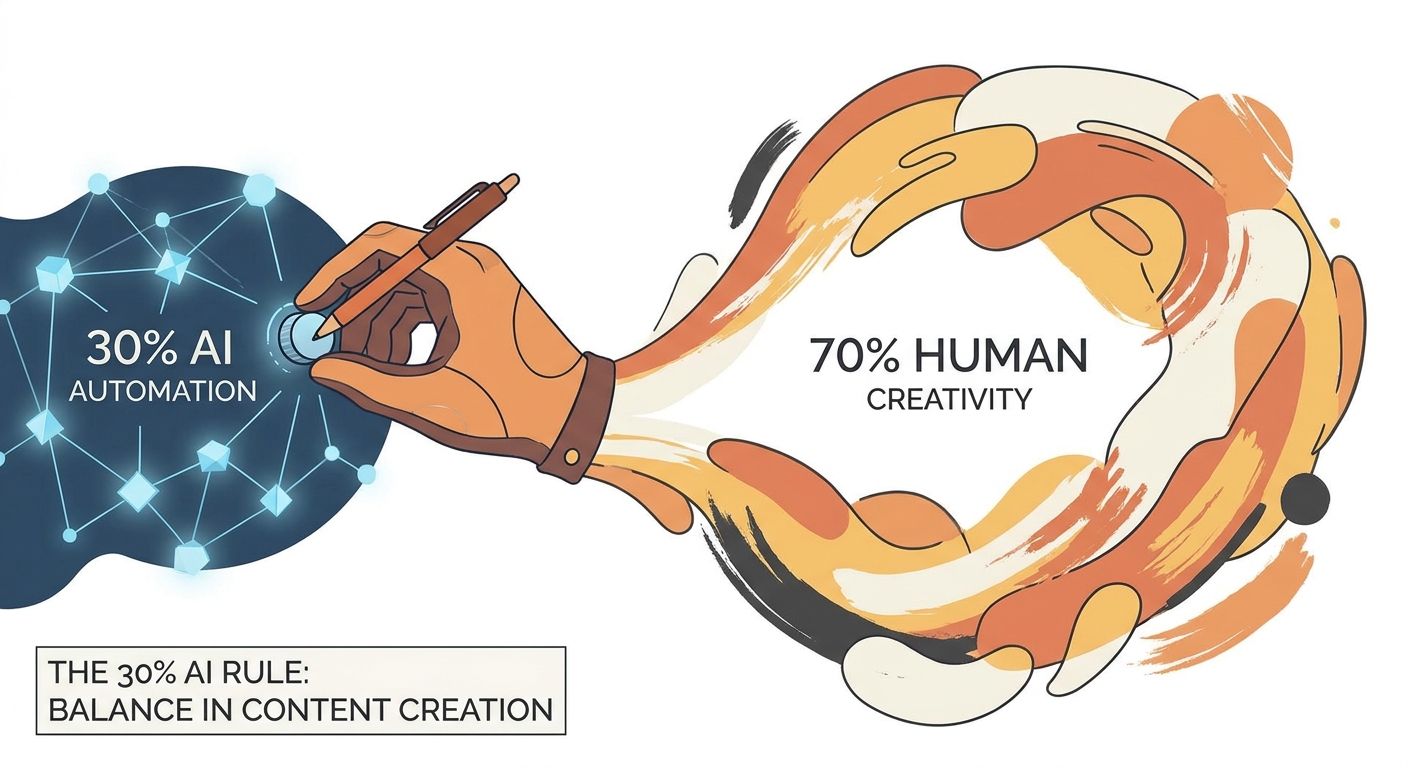
You have to draw a line: use AI for the messy ideation phase, but keep the final execution human-led. As noted in the Harvard DCE analysis on the future of marketing AI, the winners will be the brands that use AI to amplify their specific human values, not those that use it to automate their personality away. We’ve put together a guide on How We Maintain Brand Voice in AI Workflows to help teams navigate this balance.
Writing Your Internal Policy
Your policy shouldn't be a dusty PDF. It needs to be a living document that defines the red lines between "Okay to use" and "High-Risk." Which data can employees feed into an LLM? Which tasks require a human sign-off?
If you don't have a clear policy, grab our AI Policy Template and start standardizing. You need to give your team a safety perimeter so they can actually innovate without burning the house down.
Frequently Asked Questions
How do I label AI-generated content to remain compliant with 2026 regulations?
Compliance requires clear, conspicuous disclosures. This includes "AI-generated" badges on visual assets, metadata headers that identify the model used, and editorial notes explaining the extent of AI involvement in the article.
Is it ethically acceptable to use AI to generate images of people for marketing?
Using synthetic likenesses carries extreme risk. If you use AI to create human avatars, you must ensure you have explicit, revocable consent from the individuals whose likenesses were used to train the model, and you must clearly signal to consumers that the person in the ad is not a real human actor to avoid deepfake-related backlash.
How can we prevent AI from inheriting the biases found in our training data?
Mitigation requires a combination of strict prompt engineering, Reinforcement Learning from Human Feedback (RLHF), and the use of diverse, vetted datasets rather than raw internet scrapes. Regular "bias audits" of your output are essential.
What is the "Human-in-the-Loop" standard for enterprise content?
The standard dictates that no content—especially content related to health, finance, or legal advice—can be published without a validated human editor verifying the accuracy of the claims, the tone of the voice, and the integrity of the sources.
How do we handle AI-generated misinformation if it accidentally gets published?
You need a rapid-response protocol. Immediate retraction, a transparent public correction notice, and a root-cause analysis—identifying why the human review failed—are non-negotiable steps to maintaining public trust.