Decoding the 30% Rule in AI Content Creation

TL;DR
- ✓ Limit AI to 30 percent of your workflow for research and structural scaffolding.
- ✓ Reserve 70 percent for human strategy to maintain authenticity and E-E-A-T standards.
- ✓ Use AI as a research assistant to avoid publishing unverified synthetic content.
- ✓ Protect your search rankings by vetting every AI-generated claim for accuracy.
The digital world in 2026 is a cacophony of algorithmic noise. If you’re a brand trying to be heard, you’re likely drowning. But there’s a survival protocol that separates the industry leaders from the "AI-slop" factories: I call it the 30% Rule.
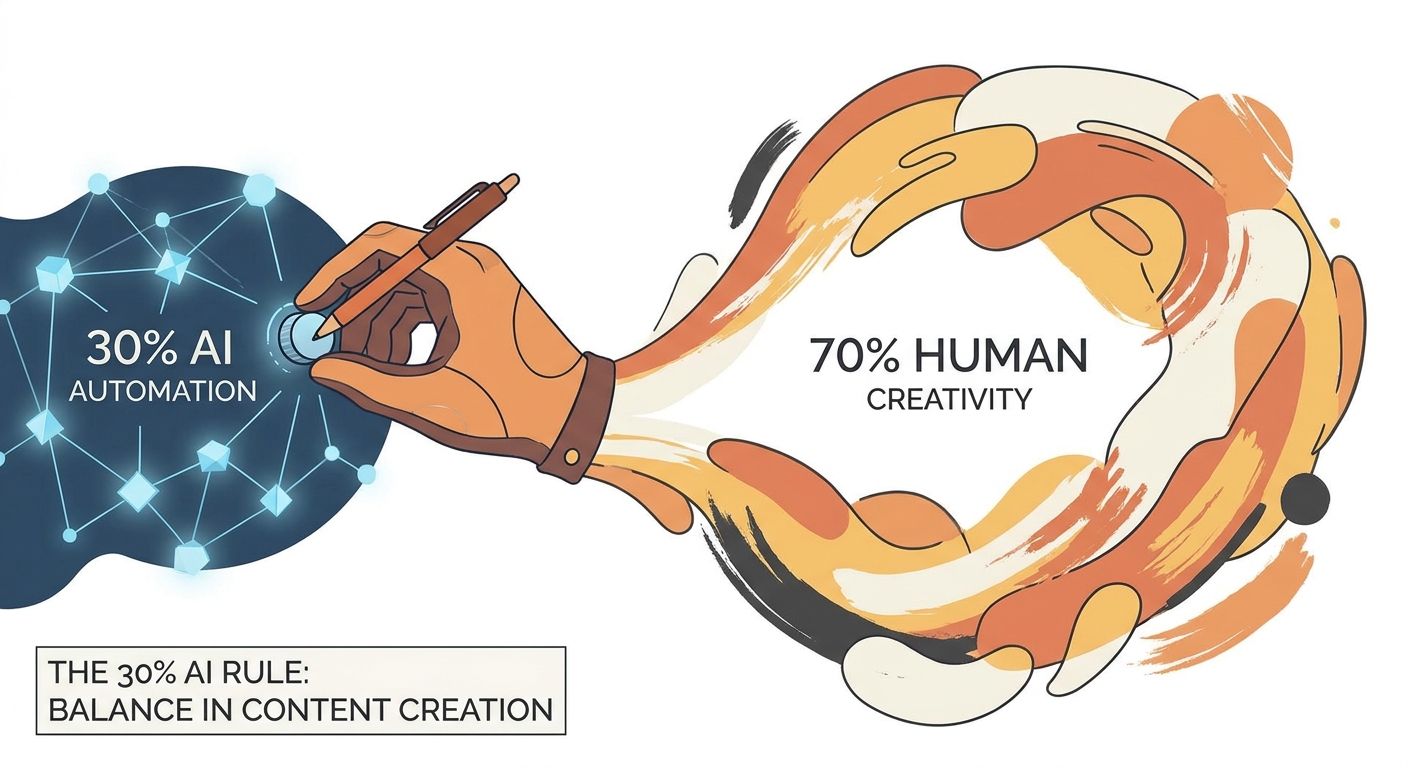
The math is simple. AI handles 30% of the heavy lifting—research, data scrubbing, and structural scaffolding. Your human team keeps 70% of the control. This isn’t just a workflow preference; it’s a defensive line. It’s what keeps your brand from being buried by search engines and ignored by actual, thinking customers.
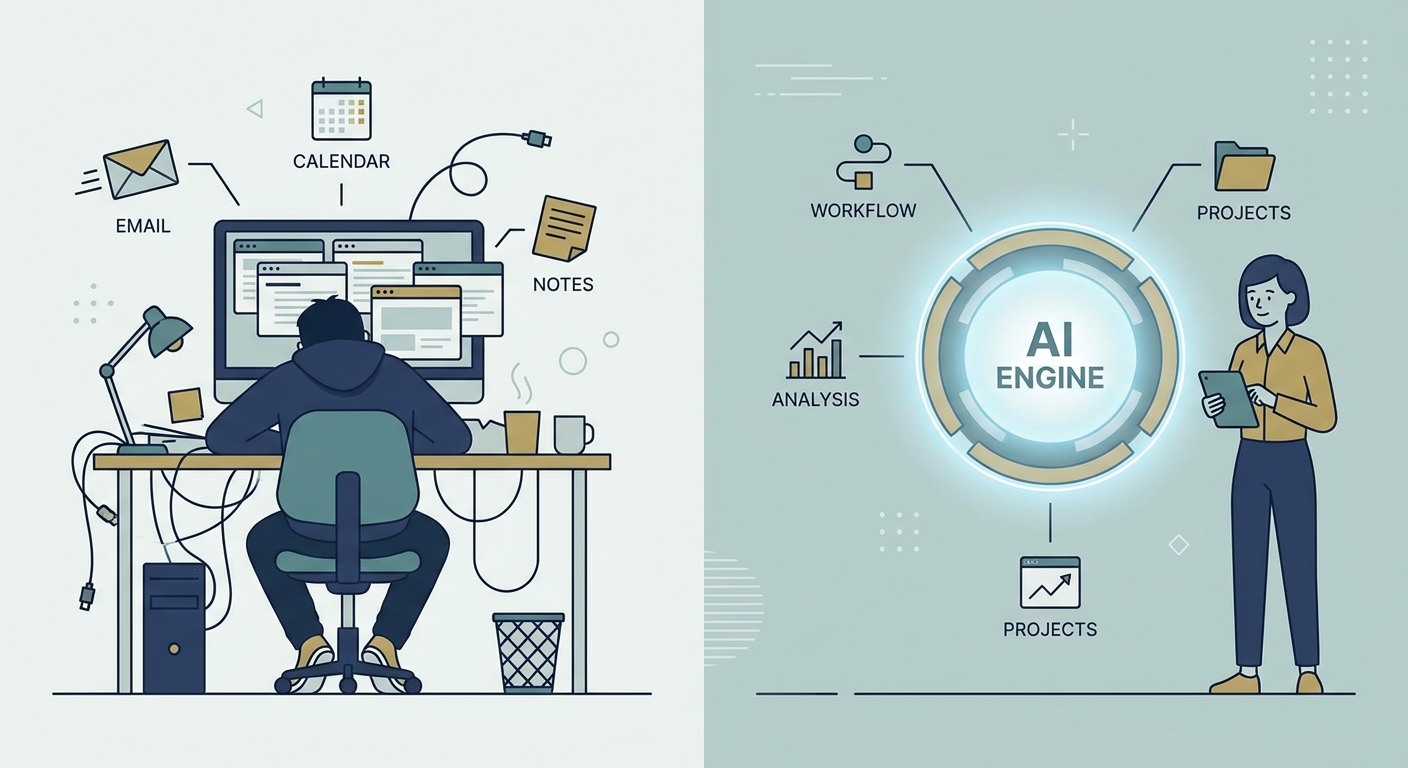
Stop thinking like a writer. Start thinking like an "Agent Orchestrator." When you quit trying to force the machine to do the creative work, you finally leave room for the human pulse that builds real trust.
The 70/30 Hybrid Blueprint
Why this ratio? Because it’s the only way to balance machine-speed efficiency with human-grade authority.
The 30% slice is your efficiency layer. Use LLMs for what they are: glorified research assistants. Let them cluster your keywords, build your outlines, and turn dense, dry data into readable blocks. It’s the grunt work that used to eat up your Tuesday mornings, now finished before your first cup of coffee.
The 70% slice—the lion’s share—is where your value lives. This is your "secret sauce." It’s the original interviews, the messy personal anecdotes, the nuanced case studies, and the critical Human-in-the-Loop (HITL) verification that Google demands for E-E-A-T. If you skip this 70%, you’re just publishing hallucinations that no one asked for.
Why the 30% Rule is Your SEO Shield
Google isn’t stupid. Their algorithms are getting better every day at sniffing out that "synthetic" smell. When you rely 100% on generative tools, you aren’t just risking a rankings drop; you’re eroding your brand’s soul.
Look at the data on AI writing trends. Content that lacks deep human synthesis rarely earns the backlinks or social signals that actually drive growth.
Then there’s the "hallucination penalty." One fake quote or one wrong statistic can tank your credibility. By locking AI out of the final 70%, you ensure every claim is vetted by a living, breathing expert. Use the machine to move faster, but keep the human in the driver's seat to make sure you’re actually arriving somewhere worth visiting.
Executing the 30% Workflow
Discipline is the key. If you’re hitting "publish" on a draft that hasn't been significantly rewritten, you’ve failed. You’re under the 70% threshold.
Phase 1: The AI "Grunt Work" Layer
Treat AI like an intern who’s great at organizing but shouldn’t be talking to clients. Use the Claude Prompt Library to build standardized prompts.
Need to summarize a 50-page industry report? Let the AI do it. Need an H2/H3 outline based on high-intent keywords? Let the AI handle the skeleton. This is the 30% layer. It’s about building a frame, not finishing the house.
Phase 2: The 70% Human Synthesis
The machine stops here. Now, you inject the "tasting spoon." This is where you add the color. Weave in quotes from your CEO. Link to your own proprietary data. If the tone feels "flat"—and it will, because AI is inherently beige—that is your signal to lean into the 70% phase. You aren’t just editing; you’re curating a narrative that an algorithm simply cannot replicate.
The Agent Orchestrator Mindset
The "content writer" is dead. Long live the "Agent Orchestrator."
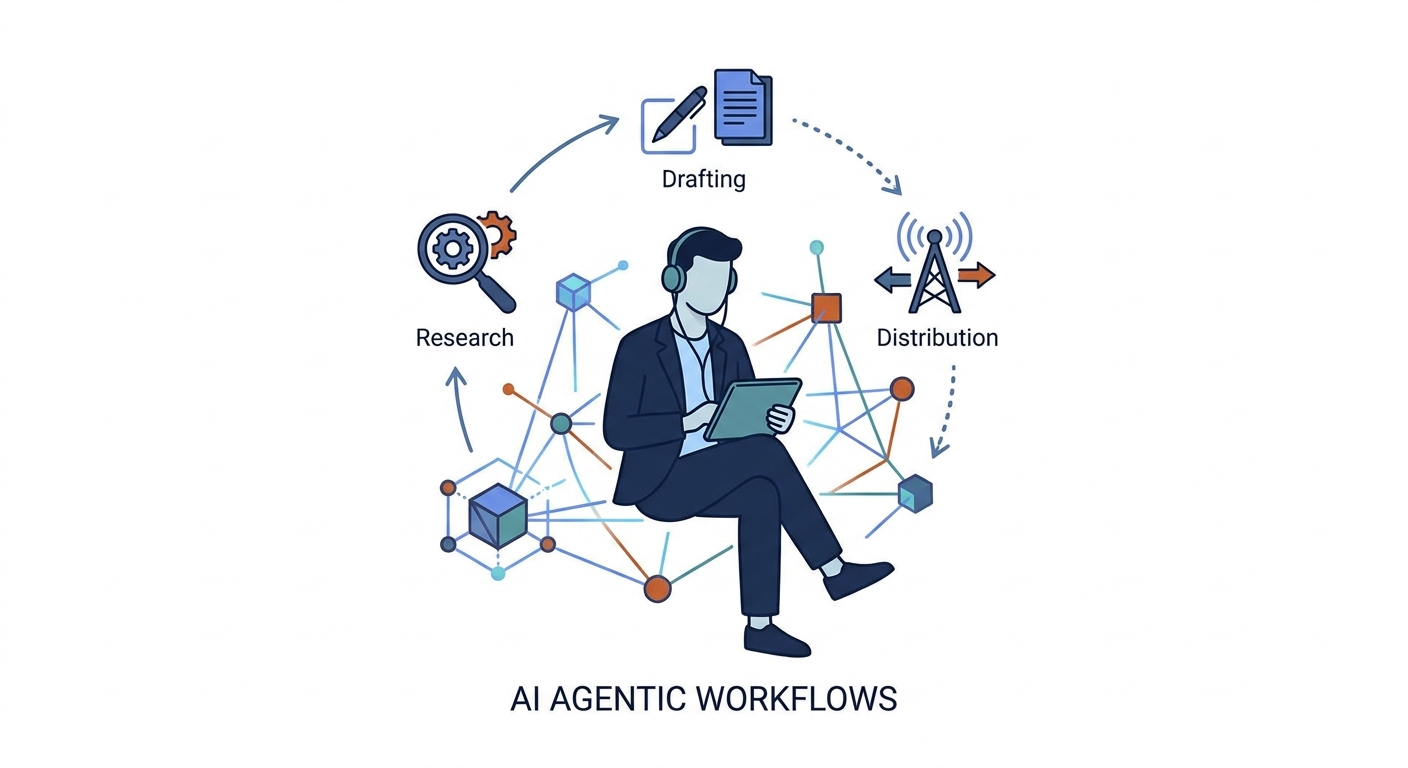
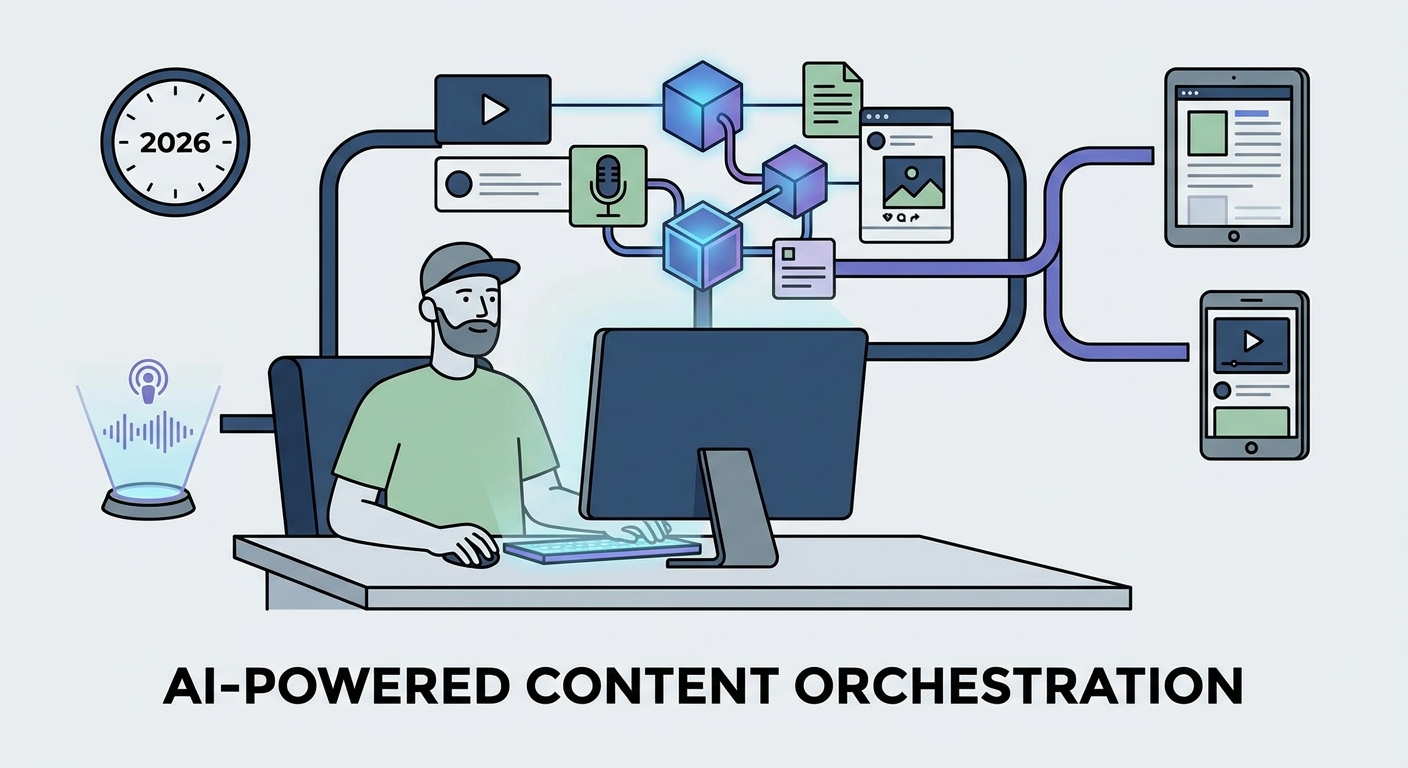
An orchestrator doesn't just type. They manage a workflow. They know which LLM is best for data analysis and which human on the team is best suited to conduct the interview for the case study.
Maintaining consistency across automated drafts is the biggest headache for modern teams. If you’re struggling to keep your brand voice from sounding like a generic corporate brochure, you might need help. Check out our expert-led content strategy services to build your internal guardrails. As we discuss in our deep dive on the future of AI in marketing, the brands that win will be the ones that treat AI as a junior assistant, not the lead creative.
Avoiding "Lazy Editing"
The most common way to fail the 30% rule? "Lazy editing." That’s when you skim an AI draft, fix a typo, and call it a day. Don't do that. Before you hit publish, run the content through this three-point audit:
- The Fact Check: Have you verified every external claim against a primary source? AI loves to invent sources that sound real but don't exist.
- The Voice Check: Does this sound like a human expert, or a generic brochure? If you swapped your company name for a competitor’s and the text still worked, it’s not human enough.
- The Value Check: Does this content provide a unique perspective, or is it just a rehashing of page one? If it’s the latter, add a case study or a specific, real-world example that only you could provide.
The ROI of Scalability Without Sacrifice
When you master the 30% rule, you aren't just maintaining quality; you're unlocking massive efficiency. By offloading the research and formatting, your team can realistically increase output by 4x. We’ve watched teams move from two articles a week to eight—without losing their edge.
The math is simple: When your humans aren't spending 80% of their time on formatting and keyword research, they have the bandwidth for the 70% that actually moves the needle—the deep, insightful, proprietary content that turns readers into customers.
Frequently Asked Questions
What exactly should I delegate to AI in the 30% rule?
Delegate the "heavy lifting": keyword clustering, initial structural outlines, meta-data generation, formatting complex data into lists or tables, and initial summarization of long-form research documents.
Does the 30% rule hurt my SEO rankings?
Quite the opposite. By keeping 70% of the work human-led, you ensure your content meets E-E-A-T standards. Google rewards original, authoritative, and trustworthy content, all of which require the human touch that AI cannot provide on its own.
How do I maintain my brand voice if I use AI for 30% of the work?
The secret is in the "tasting spoon" edit. Use AI to draft the structure, but rewrite the opening and closing paragraphs manually. By consistently applying your own brand’s tone during the 70% synthesis phase, you maintain a cohesive voice throughout the entire piece.
Is the 30% rule applicable to video or just text?
It is highly applicable to video. Use AI to script the structure and research the talking points, then have your human talent record the script, providing the inflection, cadence, and personal anecdotes that make video content engaging.
How do I handle AI hallucinations using this method?
The 70% human component is your primary defense. By treating AI output as a draft that must be verified against primary sources, you catch hallucinations before they ever reach your audience. Never hit "publish" on a piece of content you haven't personally verified.
Ready to optimize your content team? Download our 30% Workflow Checklist (PDF) to start scaling your production without sacrificing the human spark that builds your brand.